The drive from Tbilisi to Kazbegi has three personalities, and the difference between them is the difference between an extraordinary day and an exhausting one. Summer is the postcard version, with the tour buses and the wedding-photo parties on the same overlooks. Winter is the dramatic version, when the road is for the ski crowd and the Cross Pass closes without warning. Shoulder season is the version most concierges don’t book, and that is its case.
Mid-May and late September are the two windows — the off-season strategy applied to one road. The pass is open, the temperature in the valleys is in the high teens, the wildflowers above Gudauri are at their best, and the foreign coach traffic has either not yet arrived or already left. We drive it more in those four weeks than in any other stretch of the year.
Three roads, one route
The same 152 kilometres from Tbilisi to Stepantsminda becomes three different drives depending on when you take it.
Summer (mid-June to early September) is when the road earns its reputation. Long daylight, dry asphalt, every village open. Also: the heaviest tour-bus traffic of the year, every viewpoint shared with thirty other people, every restaurant in Pasanauri overflowing at lunch. Beautiful but managed. Plan around the crowd or accept it.
Winter (December through March) is for skiers heading to Gudauri and ice-photographers heading to Kazbegi. The pass is officially open but can close for hours or days when snow falls hard. We refuse the day if forecasts are uncertain. When the road is clear, winter Kazbegi is the most cinematic version of this drive: snow on Gergeti Trinity, the river frozen at the edges, the village smelling of woodsmoke. But the windows are narrower than guests usually realise.
Shoulder (mid-May and late September) is what this piece is about. Daylight is still long, the pass is dependably open, the meadows are green, the buses have either not started or already finished, and the air is clean enough that the Caucasus shows itself for the whole drive. The downside is that some Gudauri restaurants are between seasons. We work around it.
The Jvari Pass and why elevation matters
The Cross Pass — Jvari Pass — is the high point of the road, at 2,379 metres. Two practical things follow from that.
First, weather at the pass and weather in Tbilisi are not the same. Tbilisi can be 22 degrees and clear while the pass has cold rain or a snow flurry. We carry an extra layer for guests in the boot of every car whether they ask or not. In May the pass is sometimes still bordered by hard-packed snow, even with sun above.
Second, the pass is the point on the road where the day flips from green to grey. South of Jvari, you are still in the forested upper Aragvi valley. North of Jvari, you are above tree line, in alpine meadow that runs to the rock walls of Kazbegi. The contrast in the same hour is the part of the drive guests remember most.
A short stop at the Russia-Georgia Friendship Monument, the brutalist viewpoint above Gudauri, is the conventional first photo. The pass itself is twenty minutes further. Take both.
Gudauri without the ski-lift queue
Gudauri exists because of the ski lifts, but in May and September the lifts are off and the village shows what it is underneath. Long hillside meadows, a handful of restaurants that work in the off-seasons, and the trailheads for short walks at altitude that nobody is using.
Two recommendations for a shoulder-season stop. The Lomi restaurant at the top of the village stays open through May with limited hours; reserve. The trailheads above the village (the one toward Kobi gorge, and the one to the small lake at the back of the meadow) are walkable in under two hours and put you at 2,400 metres with no equipment beyond shoes that close.
The wildflower bloom in late May is the thing photographers come for and most guests miss. It runs from about 18 May to 5 June, weather dependent. We can usually narrow the date to the week if asked in advance.
Ananuri, Pasanauri, Mleta: the stops that earn the slot
Three real stops worth the time on a one-day drive. Skip the rest.
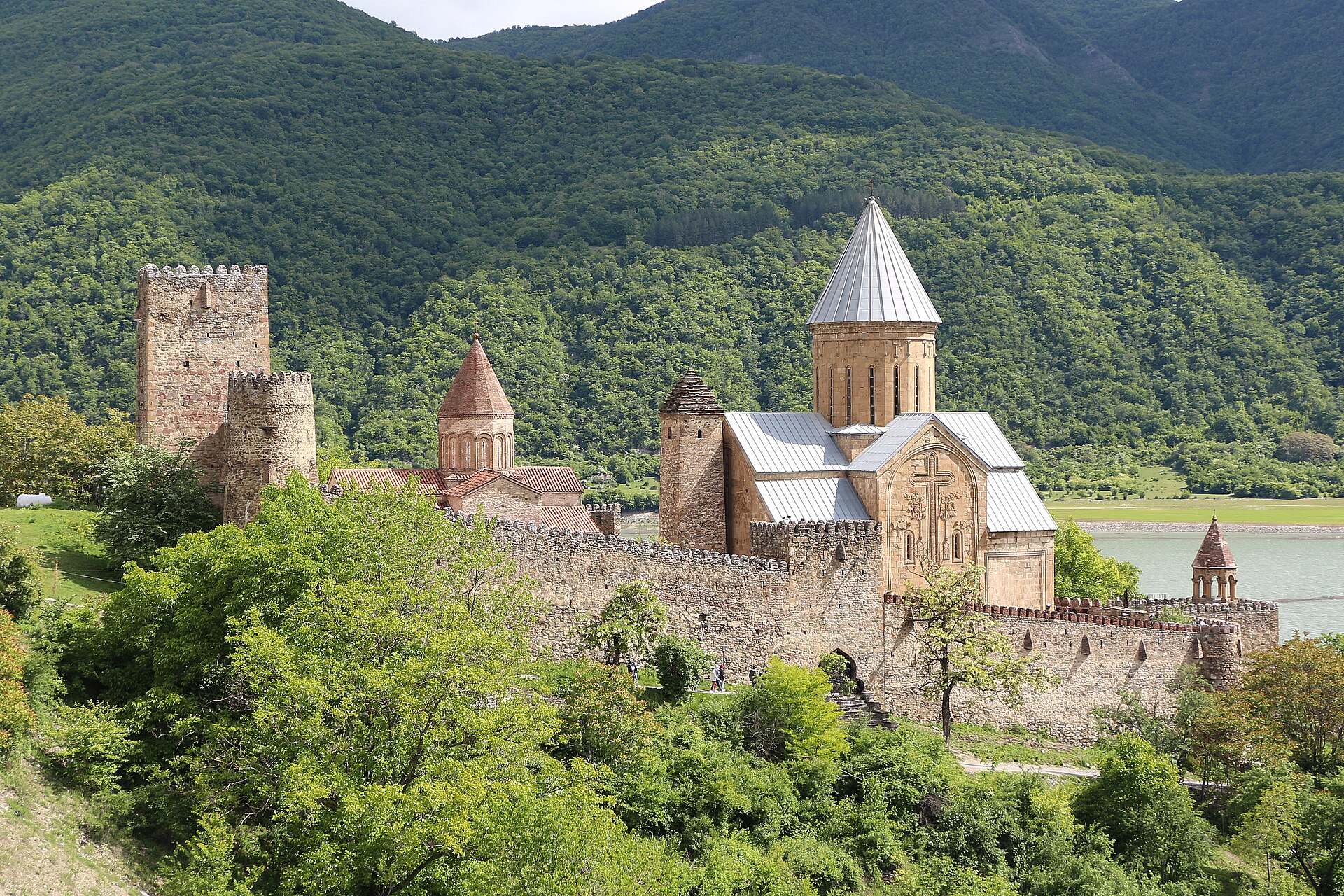
Ananuri Fortress. Seventy kilometres out of Tbilisi, on the reservoir. Sixteenth-to-seventeenth-century church complex, the dome is intact, the view down the Aragvi is the right kind of dramatic. Twenty-five minutes is enough; an hour if you walk down to the water.
Pasanauri. The conventional lunch stop. The town is unremarkable, but two khinkali houses on the main road do the thing they are famous for at a level the airport version does not match. Skip the ones with English menus posted outside. Forty-five minutes for a sit-down lunch.
Mleta. The village at the base of the climb to Jvari Pass. There is a tiny bakery and a viewpoint over the switchbacks. Five minutes, but the switchbacks are the photograph you will frame.
Stepantsminda (Kazbegi) and Gergeti Trinity get their own piece — see Kazbegi from Tbilisi. For the purpose of this piece, treat them as the end of the road.
What to check the morning of
Three things. The pass status (we check the public road authority feed and call our contacts at the Mleta checkpoint). The Mestia and Gudauri forecasts (the pass weather usually splits the difference). The river — high spring melt in May can flood the Aragvi above Pasanauri in ways that close the secondary road back, which matters if you were planning to return via Pshavi.
If the pass shows yellow on the road feed, we do the trip. If it shows red, we don’t and recommend rebooking, usually within 48 hours. Forcing a closed pass is the wrong call no matter the booking pressure; we’ve watched a tour van spend nine hours at the Mleta checkpoint waiting for a clear.
The return via Pshavi
The conventional return is the same road back. The interesting alternative is to drive home via Pshavi and Khevsureti, the parallel valley to the east. It adds two hours and a different landscape. The road is gravel in places and not ideal in rain, so it is a fair-weather option.
We don’t recommend the Pshavi return for a single-day Kazbegi trip — it makes the day too long. It works when paired with a Gudauri overnight, which makes it a multi-day booking rather than a day hire. The two-day version, Kazbegi out and Pshavi back, is one of the better road weeks in Georgia for guests who care about driving.
The booking note
For shoulder-season Military Highway days, the booking window matters. Mid-May fills up two months ahead because of the wildflower photographers; late September fills around the autumn colour. If the date is locked, book early. If the date has flexibility, tell us the goal (flowers, colour, ski-and-no-skiers, quiet roads) on the brief and we can match the week.
Guests doing the country in a single trip usually put the wine roads of Kakheti on the other side of the week; this road runs north. Email bookings@soitblack.com with the date or the goal, the size of the party, and whether an overnight in Gudauri or Stepantsminda is on the table — or send it through here.