When a guest has half a day in Tbilisi, this is the trip we recommend. Not because it’s the easiest sell. Because it’s the only one that fits the time given and still feels like Georgia.
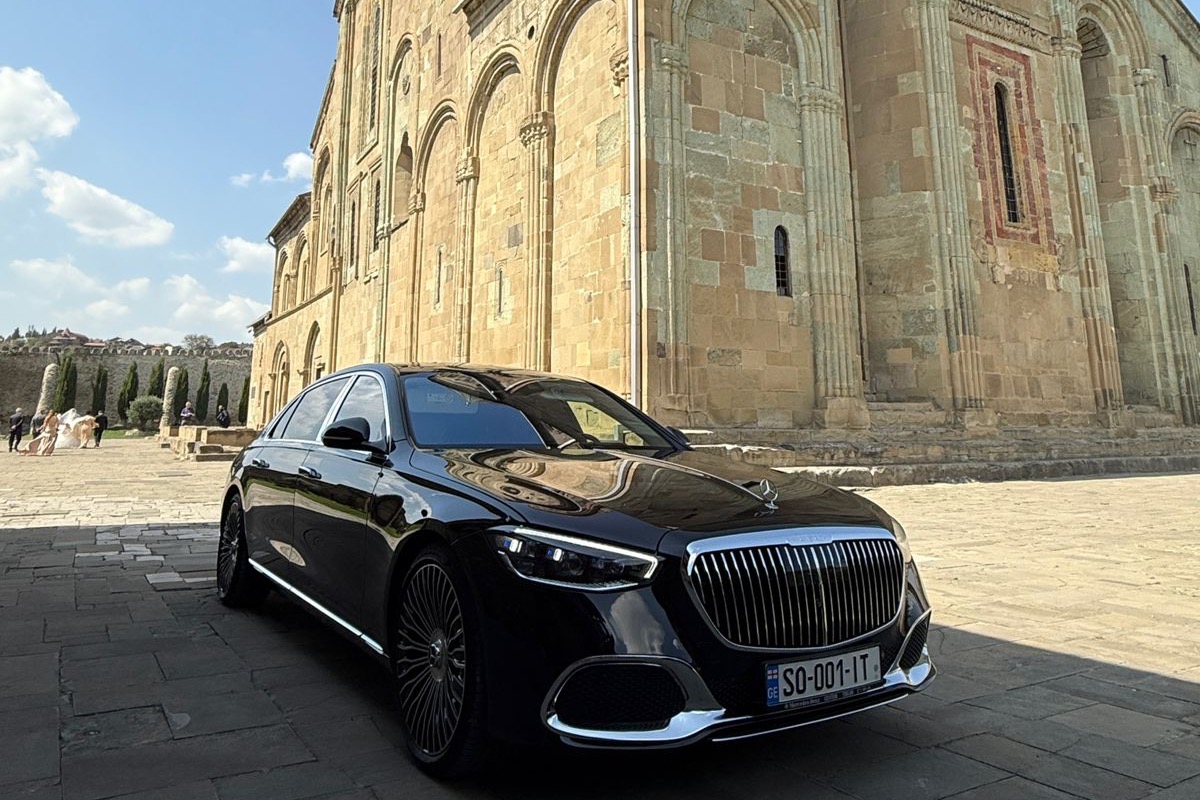
The geography
Mtskheta sits 20 kilometres north of Tbilisi, at the point where the Mtkvari and Aragvi rivers meet. The drive is 25 to 30 minutes off-peak, 40 in heavy traffic. From a hotel in Vake or the Old Town, door to door, you are looking at about an hour of car time and two and a half hours on the ground. Half a day, easily.
Mtskheta was the capital of Iberia, the eastern Georgian kingdom, from the 3rd century BC until King Dachi moved the seat to Tbilisi in the early 6th century AD. Eight hundred years of capital status, then a small town with three remarkable churches. UNESCO inscribed the Historical Monuments of Mtskheta in 1994.
The order matters
Two churches earn the trip: Jvari, the 6th-century monastery on the hill above town, and Svetitskhoveli, the 11th-century cathedral in the town centre. Do them in that order. Three reasons.
First, Jvari sits at 656 metres above sea level on a steep cliff. The view down to the confluence of the two rivers is the photograph everyone takes from Mtskheta. That view is at its best in late-morning light, before the valley haze sets in. Get there first.
Second, the climb to Jvari is a separate drive of about 15 minutes up a winding road. Doing it on the way in, while the chauffeur and the day are fresh, beats doing it last when everyone is tired and the light is gone.
Third, after Jvari you descend into the town and end at Svetitskhoveli, the cathedral that holds the trip’s centre of gravity. It is the right place to finish. Coming the other way leaves the visit anticlimactic.
Jvari, briefly
Built between 590 and 605 AD. The form is a tetraconch: four apses around a central square, the kind of plan that influenced Caucasian church architecture for centuries after. Inside, the space is dim and small. The point is the outside, the position on the cliff, and the view down to the two rivers.
Saint Nino, the 4th-century evangelist who brought Christianity to Georgia, is said to have erected a wooden cross on this hill. The monastery name (Jvari means cross) records that. The hilltop has been a place of pilgrimage since.
Allow 30 minutes on site. Longer if your guest wants the photograph from every angle.
Svetitskhoveli
The present cathedral was completed between 1010 and 1029 AD by an architect named Arsukidze, commissioned by Catholicos Melchizedek I. There was an earlier 4th-century church on the same site. Svetitskhoveli is Georgia’s patriarchal cathedral, the seat of the Catholicos-Patriarch, and traditionally the place where the robe of Christ is buried beneath the central pillar. The cathedral’s name means “the life-giving pillar.”
The interior is a working church. Services run; pilgrims pray; the murals on the walls are slowly being restored. Brief your guest in advance: women cover their heads, men remove hats, photography of clergy is not done — the same rules that apply at the Alaverdi monastery cellar.
The space holds people. Even on a busy day, the proportion of the cross-domed plan absorbs the crowd. Stand in the centre, look up, give it three minutes of silence. That is the visit.
Allow 45 minutes to an hour. Less if your guest is not a church person; the architectural reading happens in five.
What to skip
The narrow streets between Svetitskhoveli and the river are pleasant but unremarkable. Souvenir shops, churchkhela vendors, a few cafes. Half an hour of walking covers everything worth seeing. Do not let it expand into an hour.
Samtavro Monastery, the third component of the UNESCO site, is a five-minute walk from Svetitskhoveli. It is functional and quiet but not visually arresting. If your guest is unhurried and curious, include it; otherwise skip.
The “Mtskheta from above” viewpoint near Jvari is the same view from a parking lot 100 metres away. Not a separate stop. Do not let a guide tell you it is.
Timing the half-day
The best window is 9:30 am to 1 pm. Leave the hotel at 9, at Jvari by 9:45, down to Svetitskhoveli by 11, back to the city for a 1 pm lunch. The morning has the light. The afternoon will not.
If a guest insists on an afternoon slot, leave by 2 pm to be at Jvari before the sun goes flat and at Svetitskhoveli before its 5 pm closing. Tighter window, less forgiving of delay.
Avoid Sundays at Svetitskhoveli unless the guest specifically wants to attend the morning liturgy. The service runs from about 9 am to 11 am and the cathedral is full. Quiet visits on Sundays only after noon.
Driving notes
Fuel. Fill up in Tbilisi before leaving. There are stations in Mtskheta but no major brands. Not worth the stop.
Parking. Jvari has a paved lot at the entrance, no fee. Svetitskhoveli requires parking on the approach street; in summer this can mean a 200-metre walk for guests, which we usually avoid by dropping at the cathedral gate and picking up there; the cars we run are long and the approach street is not.
Toilets. Reliable at the Svetitskhoveli complex entrance. Jvari has facilities but they are not always open.
Cell signal. Solid throughout. Mtskheta is close enough to Tbilisi that nothing drops.
Last driven by us: May 2026.
When Mtskheta is the wrong recommendation
The half-day works when a guest has exactly that, half a day. If they have a full day and have not seen Kazbegi, take them to Kazbegi instead. If they have two days and they like wine, Kakheti. Mtskheta is the answer to a specific question, not a default — say which question in the brief and we will match it.
A short closing note
Half a day, two churches, twenty kilometres each way, and the river view that defines the country’s old maps. If you would like a chauffeur for a Mtskheta morning or afternoon, write to bookings@soitblack.com or tell us the window you have.