For most of the past fifteen years, Georgia’s tourism economy ran on a familiar pattern: a sharp July-August peak, a strong September shoulder, a slower October, then a quiet six months until the summer cycle restarted. The pattern made the country economically dependent on a narrow window and structurally exposed to weather, regional shocks, and the kind of slow news that does not earn a year’s flight bookings on a single press cycle.
That pattern is finally breaking. The 2024 visitor distribution showed shoulder months at near-peak loadings and winter Tbilisi in real growth. The seasonal flatness that destinations like Iceland and the Faroe Islands have spent a decade engineering is happening in Georgia under different pressures. The strategy works, and it is the version of Georgia worth recommending to guests who want to see the country without the summer crowd.
What the seasonal distribution looks like now
The Georgian National Tourism Administration (gnta.ge) publishes monthly arrival figures. The numbers tell three stories.
The summer peak still dominates but less. July and August still account for the largest monthly arrivals, but the share of total annual arrivals concentrated in those two months has fallen from roughly 28 percent in 2019 to closer to 22 percent in 2024. The peak is still the peak; it is no longer the only thing.
The shoulders fill up. May and September arrivals in 2024 reached 85-90 percent of July arrival numbers. October is now consistently above 70 percent of peak. The shoulder months are operationally as busy as peak was a decade ago.
Winter is the growth story. December, January, and February arrivals grew faster (year-on-year) than any other quarter in 2023, 2024, and the first half of 2025. The growth is structural, not just snow-driven.
For us, the operational reality matches the numbers. Our chauffeur calendar through 2024 was as busy in May, September, and parts of October as it was in the traditional July-August peak. Winter weekends in December and January now fill our dispatch in a way they never did before 2022.
The May and September strategy
These two months are the shoulder versions of summer. The weather is warm but not hot, the days are still long, the wildflowers are at their best (May above Gudauri, see Military Highway shoulder season) or the autumn colour is turning (October in Kakheti), and the visitor density is sane.
What’s driving the fill:
Photographers and serious travellers self-select for these months. The professional and amateur photography market, which is a meaningfully large segment now, prefers shoulder months specifically because the light is softer and the visitor density allows compositions without people in the frame. The wildflower week (mid-May to early June above Gudauri) is now booked two months ahead by photography groups.
Wine harvest tourism. September is harvest. The cellar visits that work year-round are differently interesting in late August and September because the cellars are working. The Rtveli experience (see Rtveli in Kakheti) is the single most-recommendable wine trip we run, and it only exists in this window.
The shoulder pricing premium has dissolved. Five years ago, May and September were 20-30 percent cheaper than July-August for premium hotels. The 2024 distribution narrowed this to maybe 5-10 percent, and for the best properties has compressed to nothing. The pricing-edge argument that used to attract early shoulder-season bookers no longer applies; the visitors are coming anyway.
The winter Tbilisi strategy
Winter is the harder cycle to fill but the most-watched.
The story has three layers.
The traditional ski crowd. Gudauri, Bakuriani, and Mestia have always run winter ski operations. The Bakuriani 2023 FIS Freestyle World Championships put the resort on a wider international map, and the investment that followed (see Where hospitality FDI is going) supports an expanded base. Ski tourism is the traditional winter draw and is growing year-on-year, but the rate is modest compared to other segments.
Christmas and New Year. Georgian Christmas (Orthodox calendar, January 7) and the wider end-of-year holiday window have become a meaningful destination period. Tbilisi specifically draws New Year visitors from the Gulf, Israel, and EU countries looking for a less-saturated alternative to the major European Christmas-market cities. Hotel inventory through late December and early January is now fully booked four months ahead at the premium level.
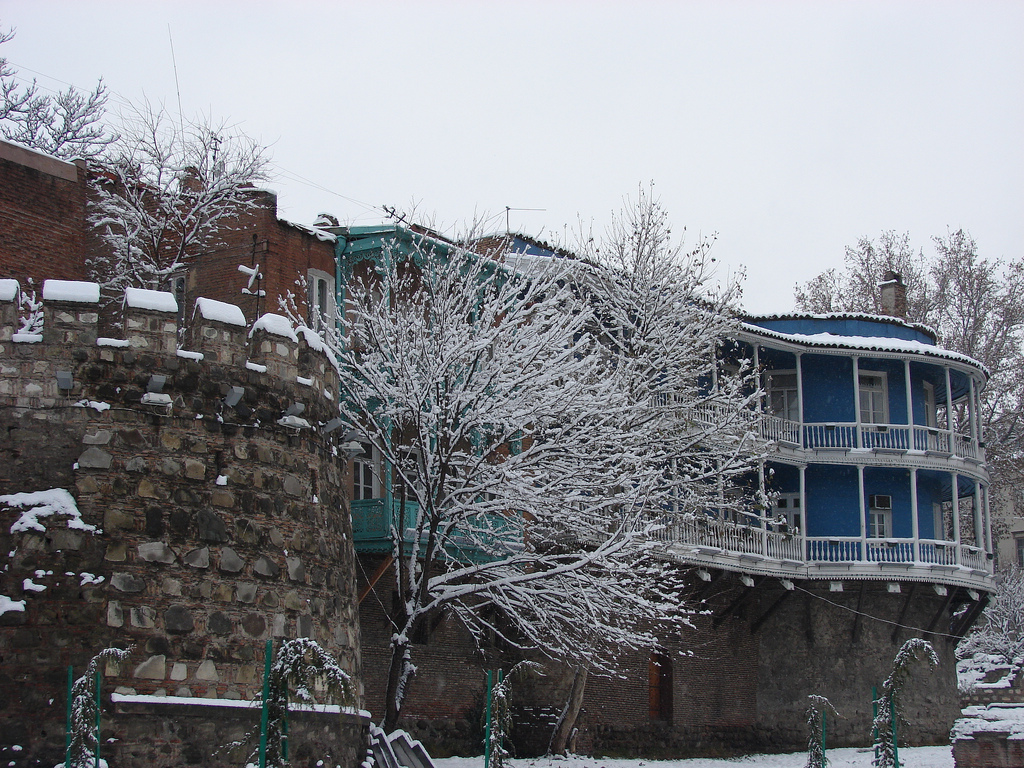
Winter Tbilisi as its own product. Independent of skiing or Christmas, the city in winter has been actively positioned by GNTA and by hotel operators as a year-round destination. The argument is straightforward. Tbilisi is mild compared to most European capitals at the same latitude (the Caucasus shields the city from northern weather). The sulfur baths in winter are genuinely lovely (see The sulfur baths). The wine and food scene operates year-round. The cultural calendar is full.
The result is that winter Tbilisi is in active growth, and the guest profile is increasingly first-time visitors who would not have considered the city in winter even three years ago.
The trip shape that earns each off-season
For concierges working through the off-season ask, three trip shapes work.
May. Kakheti plus the Caucasus shoulder route. Three days of wine country plus a two-day Caucasus loop (Kazbegi via the Military Highway, see Military Highway shoulder season). The wildflower window is the photography premium.
September. Kakheti during rtveli plus old-town Tbilisi. The harvest is the unique experience that does not exist in any other month. Four to six days total.
Late September / October. The Tbilisi-Kakheti-Batumi triangle that the Rikoti tunnel made workable. Autumn colour in Kakheti, the still-warm coast, less crowded everywhere.
Winter. Tbilisi as the base with day trips. Sulfur baths, old town, food and wine, cultural calendar. Optional Gudauri or Bakuriani extension for skiing. Four to seven days.
Each of these shapes has a specific calendar fit and a specific guest profile. The off-season strategy we recommend differs from the summer strategy in pacing as much as in content.
What this means for the booking calendar
Three takeaways for concierges and corporate travel teams.
Off-season is no longer a discount. Pricing has converged on year-round levels for premium properties. The “May saving” or “winter saving” of three years ago is largely gone. Plan budgets accordingly.
Off-season is no longer empty. The hotel inventory in Tbilisi during winter and shoulder is now booking out at premium-property level. Plan ahead.
Off-season has its own experiential premium. The trip shape during off-season is not a compromise version of the summer trip. It is a different and in many ways better experience for the right guest. Wine harvest, wildflowers, autumn colour, winter Tbilisi all give guests something the summer trip does not.
A closing note from the road
We drive the same routes in February that we drive in July, just with a different vehicle protocol (snow chains, slower speeds, different light, earlier dinners). The work continues all year now. The seasonal slow we used to plan around no longer exists.
Georgia is growing into the destination it should always have been. If you’re coming any time of year, we’ll drive you. Email bookings@soitblack.com to talk about a trip.
Related: The Georgian Military Highway in shoulder season, Rtveli in Kakheti, The sulfur baths, and Georgia’s tourism reset.